Soil-Specific Phosphorus Fertilizer Strategies for Sustainable Agriculture in Egyptian Arid Soils
Monier Morad Wahba
*

Soils and Water Use Department, Agricultural and Biological Research Institute, National Research Centre, Cairo, 12622, Egypt.
Nahed Azab
Soils and Water Use Department, Agricultural and Biological Research Institute, National Research Centre, Cairo, 12622, Egypt.
Alaa Zaghloul
Soils and Water Use Department, Agricultural and Biological Research Institute, National Research Centre, Cairo, 12622, Egypt.
*Author to whom correspondence should be addressed.
Abstract
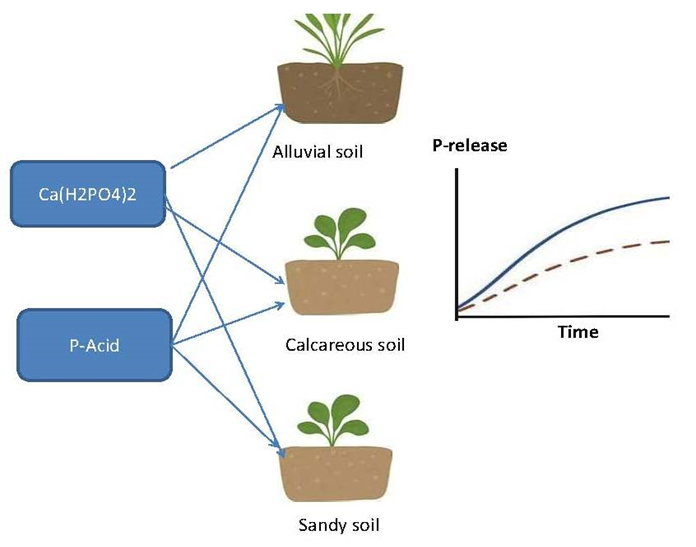
Phosphorus (P) is an essential macronutrient for plant growth, yet its availability is often limited in arid and semi-arid soils due to fixation and immobilization processes, posing significant challenges to sustainable agriculture in regions like Egypt. This study aimed to elucidate the kinetics of phosphate release in three contrasting Egyptian soil types alluvial (Typic Torrerts), calcareous (Typic Calcids), and sandy (Typic Psamments) to optimize fertilizer management strategies. Controlled incubation experiments were conducted to evaluate the effects of two P sources (monocalcium phosphate, MCP, and phosphoric acid, P-acid), varying application rates, and incubation periods on phosphate desorption dynamics. Desorption data were fitted to multiple kinetic models, including Power Function, Elovich, First-Order, and Parabolic Diffusion equations, using statistical criteria such as coefficient of determination (R²) and standard error of estimate to determine the best descriptors. Results revealed that the Power Function and Elovich models most accurately described P release patterns across all treatments, exhibiting the highest R² values and lowest errors. Kinetic parameters, particularly release rate constants, increased significantly with higher fertilizer application rates but declined over prolonged incubation periods, reflecting progressive P sorption. A pronounced soil type × fertilizer source interaction was observed: MCP application yielded release rates in the order alluvial > calcareous > sandy soils, whereas P-acid followed alluvial > sandy > calcareous, attributable to intense P fixation via calcium phosphate precipitation in calcareous soils. Power Function-derived parameters further confirmed the superior P release capacity and cumulative quantity in alluvial soils. These findings underscore the necessity of soil-specific fertilizer selection MCP for calcareous soils to mitigate fixation and P-acid for sandy soils to enhance availability thereby improving agronomic efficiency, reducing excessive fertilizer use, and minimizing environmental risks such as eutrophication from leaching and runoff. This kinetic-based approach provides a robust framework for sustainable P management tailored to diverse Egyptian agroecosystems.
Graphical Abstract
Keywords: Phosphorus release kinetics, alluvial soil, calcareous soil, sandy soil, monocalcium phosphate, sustainable agriculture, aril soil